
University of Nottingham • Jubilee Campus

Motivation for Learning as a Process of Actualisation

An interdisciplinary symposium exploring whether Carl Rogers’ concept of the actualising tendency can offer a unifying account of learning motivation across biology, neuroscience, artificial intelligence, and education.

Thu 28 – Fri 29 May 2026 09:30 Thu – 16:30 Fri (UK time) Jubilee Conference Centre

Overview

This symposium brings together researchers and practitioners across disciplines to revisit Carl Rogers’ (1963) proposition that the actualising tendency—the inherent drive of living systems towards growth, differentiation, and fulfilment—may offer a foundational account of human motivation.

Contemporary work in self-determination theory, neuroplasticity, and systems biology increasingly frames motivation and learning as emerging from the self-organising dynamics of life, rather than being imposed solely through external reinforcement or abstract goals. We will explore what it means to reframe learning as an inside-out process of interaction and actualisation—conceptually, empirically, and for educational practice.

Who should attend?
Academics and postgraduate researchers in psychology, education, neuroscience/neurology, biology, AI and learning sciences; practitioner-researchers; and anyone interested in integrative accounts of motivation and learning.
Approach
A blend of keynote talks, interdisciplinary panels, facilitated discussion groups, and structured roundtables aimed at producing publishable outputs and future collaboration.

Aims

Organising team

Professor David Murphy, Dr Richard Doyle, Marc A. Dreßler, Dr Smaragda Kampouri, Dr Shun Chen, Dr Urszula Plust, Jen Holland.

Speakers
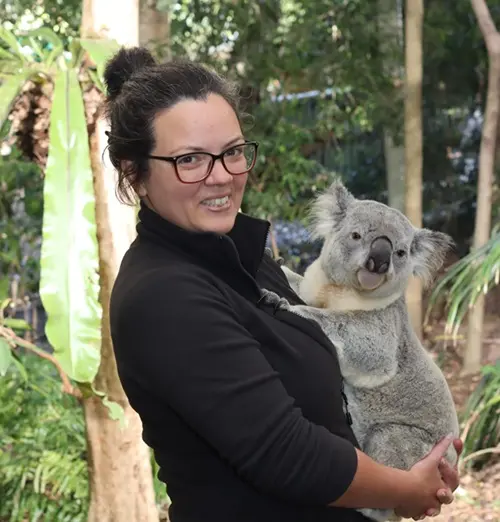
Abigail Parrish

Abigail Parrish

Lecturer in Languages Education • University of Sheffield

Dr Parrish's work focuses on student motivation in school languages classrooms, arising from her former life as a secondary school teacher. She is also the Language Learning Editor of the Center for Self-Determination Theory.
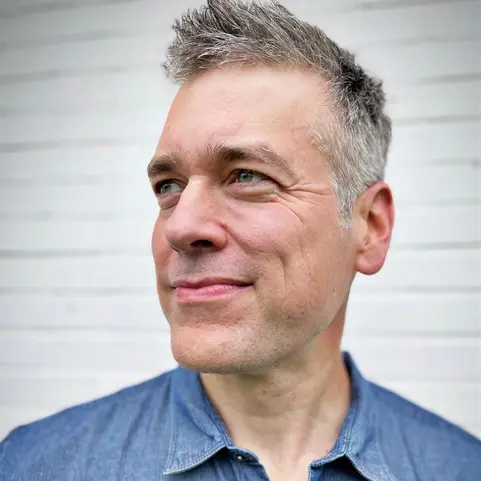
Grant Ramsey

Grant Ramsey

BOFZAP Research Professor • Institute of Philosophy, KU Leuven

Grant Ramsey is BOFZAP Research Professor in the Institute of Philosophy at KU Leuven. For more information, see the About page, download my CV, or follow us on Bluesky.
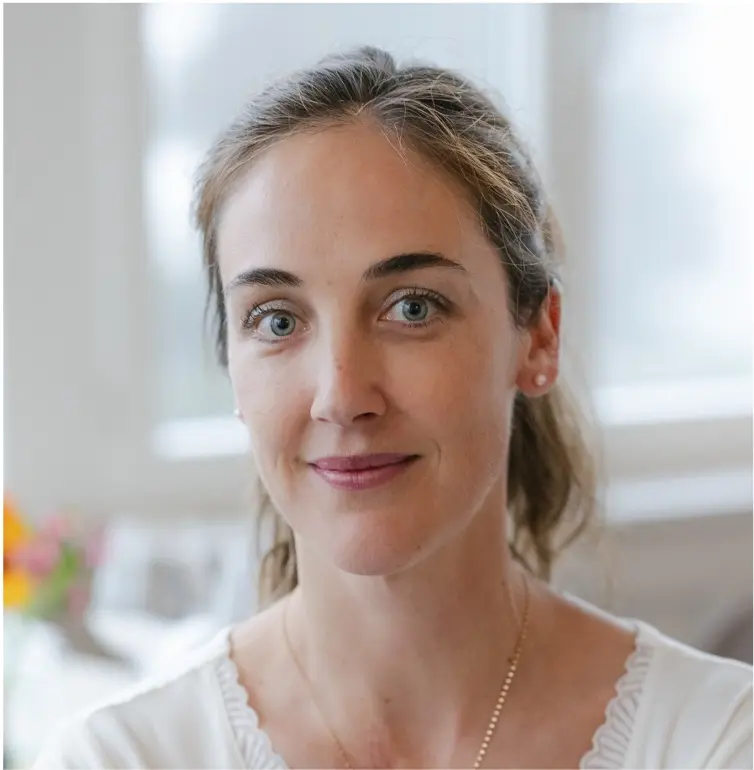
Solange Denervaud

Solange Denervaud

CIBM Flagship Project Officer • Research Staff Scientist • CIBM MRI EPFL

Dr Solange Denervaud's work uses a combination of psychophysics, neuropsychology, electroencephalography, and magnetic resonance imaging. Since October 2023, Solange is leading a project at the CIBM Center for Biomedical Imaging, federating the different CIBM expertise and techniques into a large research project aiming to break boundaries on education.

David Murphy

David Murphy

Professor of Psychology and Education • University of Nottingham

Research into therapeutic pedagogy and motivation for learning, connecting theory to practice in applied contexts.

Tim Jay

Tim Jay

Professor of Psychology of Education • University of Nottingham

Tim Jay researches the psychology of mathematics education. His main focus is on using design research methods to translate insights from psychology and neuroscience to create new findings and impact in formal and informal education contexts.

AC

Anna Ciaunica

Researcher • University of Lisbon & University College London

TBC.

FP

Francesca Prete

TBC

TBC

Programme overview

Day 1 — Foundations of Actualisation Day 2 — Neuroscience, Learning & Organismic-Educational Applications

Day 1 — Thursday 28 May 2026

Time Session
09:30 – 10:15

Registration

Arrival, coffee/tea, delegate check-in.

10:15 – 10:30

Welcome & Introduction

Professor David Murphy

10:30 – 11:30

Keynote - Dr Grant Ramsey: Talk Title TBC

Abstract TBC.

Keynote
11:30 – 12:00

Coffee break

Refreshments and informal discussion.

Break
12:00 – 13:00

Dr Anna Ciaunica - Talk title TBC

Abstract TBC.

Talk
13:00 – 14:00

Lunch

A range of food and drink outlets are available on Jubilee Campus for delegates wishing to purchase refreshments.

Break
14:00 – 15:00

Professor Tim Jay: Pedagogy, learning and motivation in early years mathematics

As part of the ESRC Centre for Early Mathematics Learning, we having been investigating children's experiences of thinking and learning about mathematics at 3-4 years of age, before they start school. We have interviewed pre-school practitioners about the ways they create opportunities for mathematics learning, carried out observations of pre-school practice, and have recorded more than 100 hours of video of naturally occurring interactions in preschool settings. There are some striking variations in the ways that pre-school settings are designed, and in the ways that practitioners approach the promotion and support of mathematical thinking and learning in their settings. We have been reflecting on what these different approaches mean for children's learning; both in terms of their developing mathematical knowledge and skill, and in their developing understanding of what it is to think mathematically. This talk will explore some of these reflections further, and with a particular focus on children's agency and motivation in their mathematics learning.

Talk
15:00 – 15:30

Afternoon break

Refreshments.

Break
15:30 – 16:30

Roundtable Panel Discussion facilitated by members of Centre for Research in Human Flourishing (CRHF)

Revisiting the actualising tendency concept: From Humanistic Psychology to Systems Science and Practice.

Roundtable

Day 2 — Friday 29 May 2026

Time Session
09:30 – 10:00

Arrival coffee

Refreshments and networking.

10:00 – 11:00

Keynote - Dr Solange Denervaud: From Errors to Meaning: How education shapes the development of error perception, creative thinking, social engagement and self-consciousness in schoolchildren

Schools do more than transmit knowledge; they implicitly shape why and how children learn. Through daily experiences of evaluation, feedback, cooperation, and competition, educational environments calibrate children’s motivation, their relationship to ideas and others, and ultimately their sense of self.
In this talk, I present a neuroscientific perspectives on school as a motivational ecosystem, focusing on how contrasting pedagogical contexts, i.e., child-centered Montessori education and teacher-directed traditional schooling, are associated with distinct developmental trajectories. Drawing on behavioral and neuroimaging data, I examine how these environments differentially engage brain systems underlying error monitoring, reward processing, exploration, and learning.
Our findings suggest that pedagogical structures are not developmentally neutral. They are linked to differences in how children process mistakes (as informative signals versus evaluative threats), how reward systems respond to external feedback versus intrinsic satisfaction, and how curiosity-driven exploration is sustained or constrained over time. These processes are central not only to academic learning, but also to the emergence of creativity, social competencies, and self-regulation.
Rather than advocating for a particular pedagogy, this talk aims to foster a rigorous dialogue between neuroscience and education. How can we design learning environments that respect sensitive developmental windows, support intrinsic motivation, and cultivate a constructive relationship to effort, error, others, and oneself?

Brief Bio

Solange Denervaud obtained a BSc. and MSc. in Bioengineering from the Swiss Federal Institute of Technology Lausanne in 2013. She completed her PhD in Neuroscience at the Lausanne University Hospital, in collaboration with the Swiss Center for Affective Sciences, bridging Neuroscience and education (2014-2020). This interest emerged from her first training as a Montessori school teacher (2003-2007). Solange’s research focuses on the impact of the learning environment on the development of core mechanisms of adaptation (i.e., error monitoring, cognitive flexibility, creativity, peer-peer learning) in schoolchildren and teenagers. Lately, her interest has extended to bridging heart and brain signals to investigate adaptive processes across development. Her work uses a combination of psychophysics, neuropsychology, electroencephalography, and magnetic resonance imaging. Since October 2023, Solange is leading a project at the CIBM Center for Biomedical Imaging, federating the different CIBM expertise and techniques into a large research project aiming to break boundaries on education.

Keynote
11:00 – 11:30

Coffee break

Refreshments.

Break
11:30 – 12:30

Dr Abigail Parrish: Self-determination theory and the (languages) classroom: practical ways in to actualisation?

Self-determination theory (SDT) is a wide-ranging theory of human motivation and flourishing, linked to actualisation in some of its conceptualisation. In this talk, we will discuss how SDT's concept of basic psychological needs might help us understand the practical embodiment of actualisation, using the secondary school modern foreign languages classroom as an example and drawing on data from several questionnaire studies.

Talk
12:30 – 13:30

Lunch

A range of food and drink outlets are available on Jubilee Campus for delegates wishing to purchase refreshments.

Break
13:30 – 14:30

Dr Francesca Prete: Talk title TBC

Talk abstract TBC.

Plenary
14:30 – 15:00

Afternoon break

Refreshments.

Break
15:00 – 16:00

Roundtable and closing discussion facilitated by Prof. David Murphy.

Actualising education - Designing Environments for Growth: pedagogy, psychological safety, equity, and institutional constraints.

Roundtable
16:00 – 16:30

Close & departures

Final announcements.

Venue & location

The symposium will take place at the Jubilee Conference Centre on the Jubilee Campus, University of Nottingham.

Jubilee Conference Centre

Venue
Jubilee Conference Centre
Campus
Jubilee Campus, University of Nottingham
Address
Nottingham, NG7 2TU (UK)
On arrival
Please follow campus signage to Conference Centre reception for registration.
Accessibility
Accessible entrances and facilities are available. Please indicate requirements at registration.

Link: Jubilee Campus Visitor Information

Registration

Please register in advance. Spaces are limited, please only register if you do intend to attend. If you have already registered and can no longer attend, let us know here so we can offer your place to someone else.