University of Nottingham • Jubilee Campus

Motivation for Learning as a Process of Actualisation

An archive of an interdisciplinary symposium held at the University of Nottingham, exploring whether Carl Rogers’ concept of the actualising tendency can offer a unifying account of learning motivation across biology, neuroscience, and education.

Thu 28 – Fri 29 May 2026 09:30 Thu – 15:30 Fri (UK time) Jubilee Conference Centre

Event overview

Motivation for Learning as a Process of Actualisation took place at the Jubilee Conference Centre, Jubilee Campus, University of Nottingham, on 28–29 May 2026. The symposium brought together researchers and practitioners across disciplines to revisit Carl Rogers’ (1963) proposition that the actualising tendency — the inherent drive of living systems towards growth, differentiation, and fulfilment—may offer a foundational account of human motivation.

Across keynote talks, research presentations and open discussion, the event explored connections between self-determination theory, neuroplasticity, systems biology, person-centred theory and educational practice. This archive page preserves the programme, speaker details, group photograph, slides and selected recordings for future reference.

Event photo

Thank you to everyone who attended and contributed to the symposium.
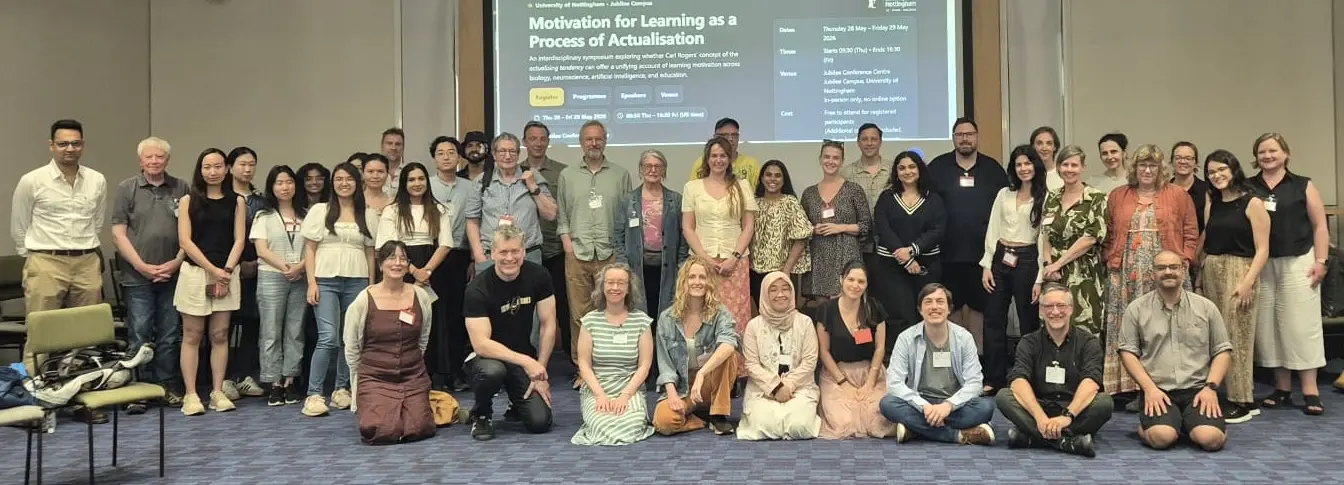
Participants at the Motivation for Learning as a Process of Actualisation symposium, University of Nottingham
Some of the participants at the Motivation for Learning as a Process of Actualisation symposium, University of Nottingham, May 2026.

Symposium aims

Organising team

Speakers

Abigail Parrish

Abigail Parrish

Lecturer in Languages Education • University of Sheffield

Dr Parrish's work focuses on student motivation in school languages classrooms, arising from her former life as a secondary school teacher. She is also the Language Learning Editor of the Center for Self-Determination Theory.

Grant Ramsey

Grant Ramsey

BOFZAP Research Professor • Institute of Philosophy, KU Leuven

Grant Ramsey is BOFZAP Research Professor in the Institute of Philosophy at KU Leuven. For more information, see the About page, download my CV, or follow us on Bluesky.
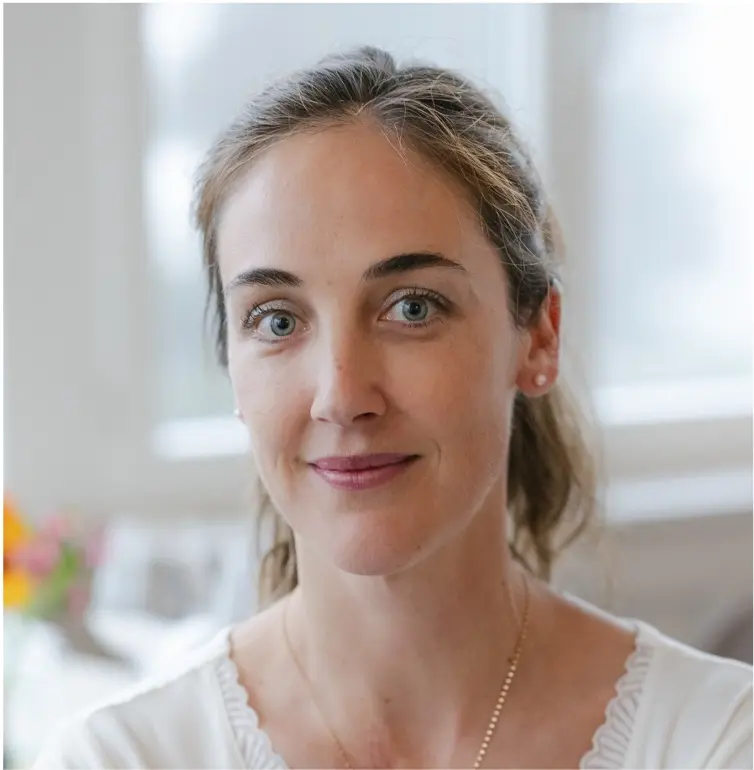
Solange Denervaud

Solange Denervaud

CIBM Flagship Project Officer • Research Staff Scientist • CIBM MRI EPFL

Dr Solange Denervaud's work uses a combination of psychophysics, neuropsychology, electroencephalography, and magnetic resonance imaging. Since October 2023, Solange is leading a project at the CIBM Center for Biomedical Imaging, federating the different CIBM expertise and techniques into a large research project aiming to break boundaries on education.

David Murphy

David Murphy

Professor of Psychology and Education • University of Nottingham

Research into therapeutic pedagogy and motivation for learning, connecting theory to practice in applied contexts.

Tim Jay

Tim Jay

Professor of Psychology of Education • University of Nottingham

Tim Jay researches the psychology of mathematics education. His main focus is on using design research methods to translate insights from psychology and neuroscience to create new findings and impact in formal and informal education contexts.
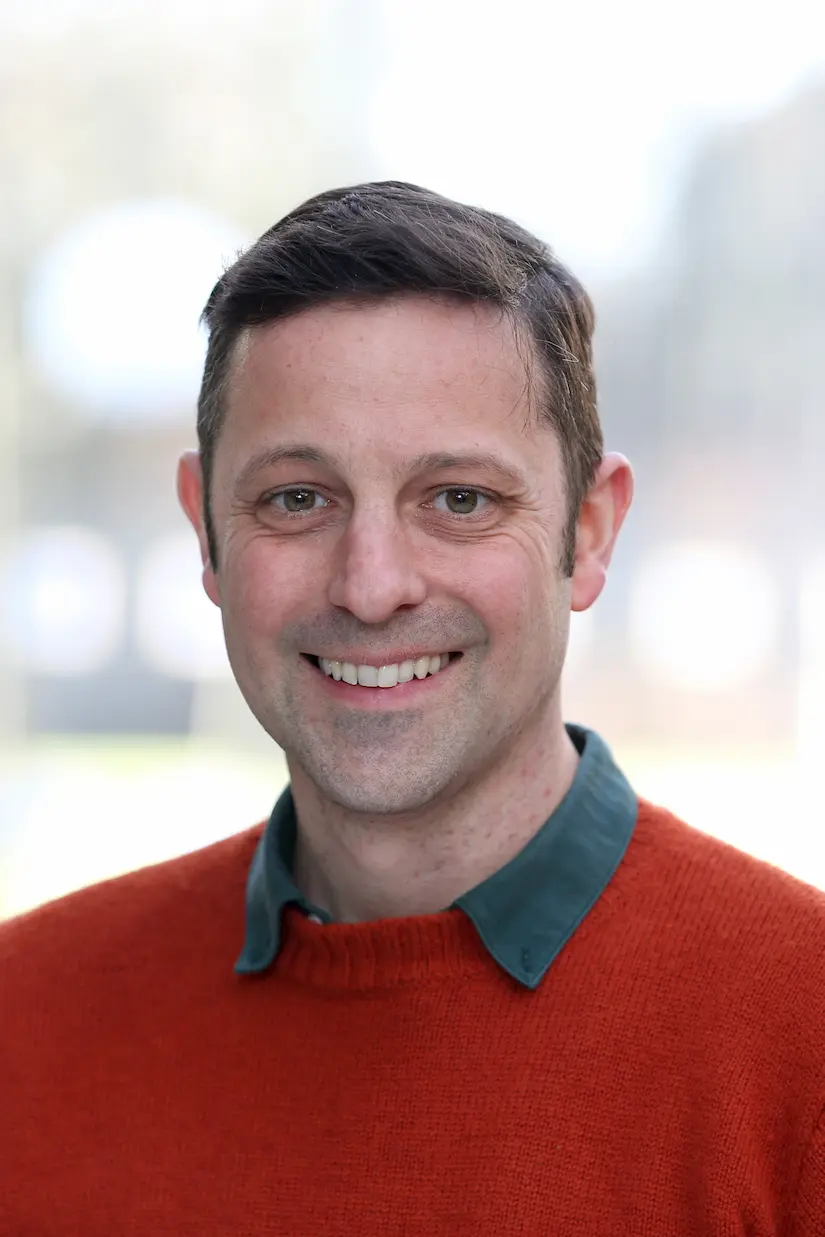
Richard Doyle

Richard Doyle

Assistant Professor • University of Nottingham

Dr Doyle is a practising person-centred counsellor and Assistant Professor at the University of Nottingham, with a PhD in chemical physics. His recent work examines therapeutic relationships and contributes to the development of person-centred theory.

Slides & recordings

Presentation materials and selected recordings from the symposium are collected below.

Abigail Parrish

Self-determination theory and the (languages) classroom: practical ways in to actualisation?

Solange Denervaud

From Errors to Meaning: How education shapes the development of error perception, creative thinking, social engagement and self-consciousness in schoolchildren

Tim Jay

Pedagogy, learning and motivation in early years mathematics

Programme from the event

Day 1 — Foundations of Actualisation Day 2 — Neuroscience, Learning & Organismic-Educational Applications

Day 1 — Thursday 28 May 2026

Time Session
09:30 – 10:15

Registration

Arrival, coffee/tea available to purchase.

10:15 – 10:30

Welcome & Introduction

Professor David Murphy

10:30 – 11:30

Keynote - Dr Grant Ramsey: Human Nature and the Actualizing Tendency

One of the features that Carl Rogers attributed to human nature is the actualizing tendency. To understand this attribution, we need to carefully analyze what this tendency amounts to and what it means for it to be a part of our nature.  This analysis is challenging in light of contemporary discussions of human nature, particularly the problem of essentialism. It seems that humans have a nature, that perhaps we could not have the human sciences without having human nature. Yet, natures are often considered to be essences. And unlike some scientific categories, like chemical elements, species are not defined in terms of essences. On top of this, humans exhibit great diversity. Thus, how can we conceptualize human nature given this diversity and anti-essentialism? And how can the actualizing tendency fit into a non-essentialist understanding of human nature?

Keynote
11:30 – 12:00

Morning break

Refreshments provided.

Break
12:00 – 13:00

Dr Richard Doyle: Actualisation Beyond the Individual: Learning in self-organising systems

Drawing on recent work on groups as self-organising systems, this talk will consider how individual and collective processes of actualisation may align or come into tension. The implications of this for learning, development, and incongruence are explored, alongside tentative links to broader scientific ideas, the formative tendency and the conditions under which order and complexity emerge.

Talk
13:00 – 14:00

Lunch

A range of food and drink outlets are available on Jubilee Campus for delegates wishing to purchase refreshments.

Break
14:00 – 15:00

Dr Abigail Parrish: Self-determination theory and the (languages) classroom: practical ways in to actualisation?

Self-determination theory (SDT) is a wide-ranging theory of human motivation and flourishing, linked to actualisation in some of its conceptualisation. In this talk, we will discuss how SDT's concept of basic psychological needs might help us understand the practical embodiment of actualisation, using the secondary school modern foreign languages classroom as an example and drawing on data from several questionnaire studies.

Talk
15:00 – 15:30

Afternoon break

Refreshments provided.

Break
15:30 – 16:30

Panel Discussion facilitated by Prof David Murphy

Revisiting the actualising tendency concept: From Humanistic Psychology to Systems Science and Practice.

Plenary

Day 2 — Friday 29 May 2026

Time Session
09:30 – 10:00

Arrival and informal discussion

Refreshments available to purchase.

10:15 – 11:15

Keynote - Dr Solange Denervaud: From Errors to Meaning: How education shapes the development of error perception, creative thinking, social engagement and self-consciousness in schoolchildren

Schools do more than transmit knowledge; they implicitly shape why and how children learn. Through daily experiences of evaluation, feedback, cooperation, and competition, educational environments calibrate children’s motivation, their relationship to ideas and others, and ultimately their sense of self.
In this talk, I present a neuroscientific perspectives on school as a motivational ecosystem, focusing on how contrasting pedagogical contexts, i.e., child-centered Montessori education and teacher-directed traditional schooling, are associated with distinct developmental trajectories. Drawing on behavioral and neuroimaging data, I examine how these environments differentially engage brain systems underlying error monitoring, reward processing, exploration, and learning.
Our findings suggest that pedagogical structures are not developmentally neutral. They are linked to differences in how children process mistakes (as informative signals versus evaluative threats), how reward systems respond to external feedback versus intrinsic satisfaction, and how curiosity-driven exploration is sustained or constrained over time. These processes are central not only to academic learning, but also to the emergence of creativity, social competencies, and self-regulation.
Rather than advocating for a particular pedagogy, this talk aims to foster a rigorous dialogue between neuroscience and education. How can we design learning environments that respect sensitive developmental windows, support intrinsic motivation, and cultivate a constructive relationship to effort, error, others, and oneself?

Keynote
11:15 – 11:45

Morning break

Refreshments provided.

Break
11:45 – 12:45

Professor Tim Jay: Pedagogy, learning and motivation in early years mathematics

As part of the ESRC Centre for Early Mathematics Learning, we having been investigating children's experiences of thinking and learning about mathematics at 3-4 years of age, before they start school. We have interviewed pre-school practitioners about the ways they create opportunities for mathematics learning, carried out observations of pre-school practice, and have recorded more than 100 hours of video of naturally occurring interactions in preschool settings. There are some striking variations in the ways that pre-school settings are designed, and in the ways that practitioners approach the promotion and support of mathematical thinking and learning in their settings. We have been reflecting on what these different approaches mean for children's learning; both in terms of their developing mathematical knowledge and skill, and in their developing understanding of what it is to think mathematically. This talk will explore some of these reflections further, and with a particular focus on children's agency and motivation in their mathematics learning.

Talk
12:45 – 13:45

Lunch

A range of food and drink outlets are available on Jubilee Campus for delegates wishing to purchase refreshments.

Break
13:45 – 15:00

Open discussion facilitated by Dr Smaragda Kampouri and Jen Holland

Actualising education - Designing Environments for Growth: pedagogy, psychological safety, equity, and institutional constraints.

Plenary
15:00 – 15:30

Afternoon break and ending

Refreshments provided.

Break

Venue & location

The symposium took place at the Jubilee Conference Centre on the Jubilee Campus, University of Nottingham.

Jubilee Conference Centre

Venue
Jubilee Conference Centre
Campus
Jubilee Campus, University of Nottingham
Address
Nottingham, NG7 2TU (UK)
On arrival
Please follow campus signage to Conference Centre reception for registration.
Accessibility
Accessible entrances and facilities are available. Please indicate requirements at registration.

Link: Jubilee Campus Visitor Information